Webinar Series
How the Internet Became the Most Advanced Operant Chamber Ever Built
Hernando Borges Neves Filho (Universidade Estadual de Londrina(UEL))
Date: January 13, 2025
Time: 10:00 AM Eastern
Abstract: What if the most sophisticated operant chamber ever built was not in a laboratory, but in your pocket? In this webinar, we will explore how the Internet has evolved, from the static Web 1.0 to the AI-embedded modern architectures of the internet, and how these algorithm-driven contingencies of reinforcement select and shape human behavior on a global scale. Drawing on the principles of operant conditioning and cultural selection, we will analyze how digital platforms (such as social media, search engines, and large language models) arrange contingencies, deliver reinforcement, and precisely register user behavior. In the twentieth century, behavioral scientists designed operant chambers to study behavior in different animal species; in the twenty-first century, humans interact daily with a digital environment explicitly designed to record behavior and deliver personalized content. Based on the presenter’s experimental work with animal models of creativity and applied research on disinformation at Brazil’s Supremo Tribunal Federal (Federal Supreme Court), this presentation argues that behavior analysts are uniquely equipped to interpret, study, and intervene in the digital environments shaping modern life. However, new methodological challenges must be addressed. This is both a scientific opportunity and an ethical imperative for behavioral scientists worldwide.
Instruction Level: Intermediate
CE Available: BACB/IBAO
Learning Objectives:
At the conclusion of this session, participants will be able to:
- Describe how major shifts from Web 1.0 to modern AI-embedded digital platforms changed the arrangement of antecedents, responses, and consequences in everyday online behavior and how this individually shaped behavior can have cultural impacts
- Analyze features of social media, search engines, and large language models as systems that arrange reinforcement, stimulus control, and register user behaviors at large scale
- Assess ethical risks and benefits associated with algorithm-driven media and technology (e.g., privacy, vulnerability, fake news and disinformation) using a behavior-analytic framework
Target Audience: The webinar is designed to be accessible to an international audience of students and researchers with basic and intermediate experience with single-subject experimental design and behavioral processes.
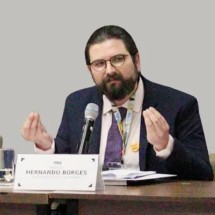
Biography: Dr. Hernando Borges Neves Filho is a tenured Professor in the Department of General Psychology and Behavior Analysis at the State University of Londrina (Universidade Estadual de Londrina, UEL), Brazil, and a graduate advisor (Master’s and Doctorate) in UEL’s Graduate Program in Behavior Analysis. He earned his Psychology degree from the Federal University of Pará (UFPA, Brazil), completed an M.S. in Behavior Theory and Research at UFPA, and received his Dr. title in Experimental Psychology from the University of São Paulo (USP, Brazil), including a doctoral exchange period at the University of Auckland (New Zealand). He has held postdoctoral fellowships at the Pontifical Catholic University of Goiás (PUC-GO, Brazil) and at UFPA. Dr. Neves Filho has previously served as a consultant and researcher in private-sector and NGO projects involving behavioral interventions, urbanism, autism services, and innovation in research and development. He is a former Editor-in-Chief of the Brazilian Journal of Behavioral and Cognitive Therapy (RBTCC). Presently he coordinates the Research Group on Creativity, Innovation, Cognition, and Behavior (CRIACOM) and is currently a collaborating researcher in the brazilian Federal Supreme Court’s Program to Understand Disinformation. His research focuses on (a) behavioral variables involved in the acceptance and dissemination of disinformation and fake news, (b) comparative models of the behavioral origins of creativity and innovation, (c) the development of games and digital tools for education and research (behavioral game design), (d) interfaces between technology and behavior, and (e) history of experimental psychology.
CE, Learning Center Video and Quiz